
Speakers
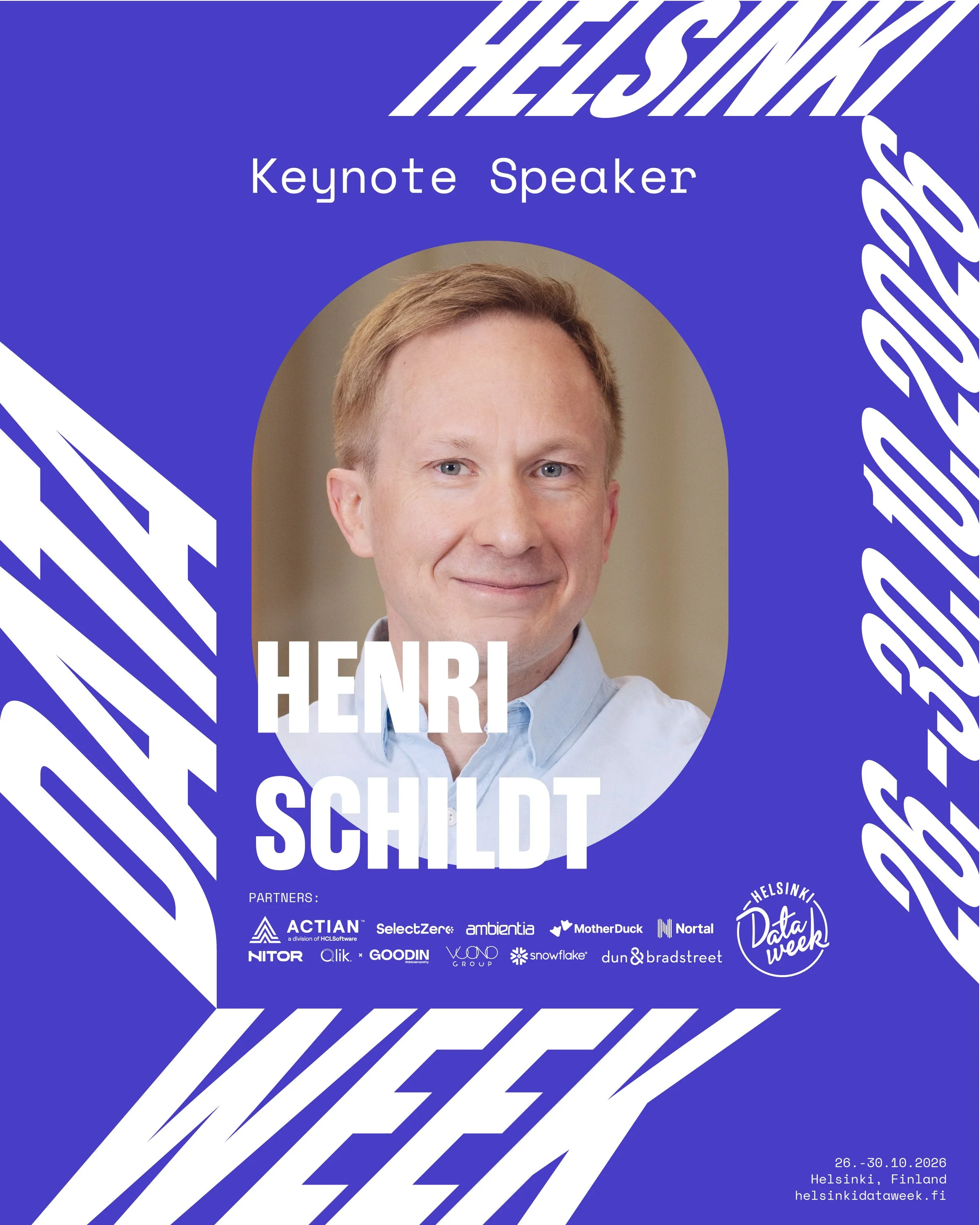
Keynote: Henri Schildt
CEO & co-founder, Skimle | Professor of Strategy, Aalto University
Henri Schildt is an experienced researcher and educator focused on the strategic and organizational aspects of data and AI. After more than 20 years in academia, Henri connected with his inner engineer and took a leave from his professorship to become an entrepreneur in 2025. His company, Skimle, uses large language models to analyze large bodies of documents, such as interviews or reports.
Henri's research examines how advances in natural language processing are reshaping knowledge work and organizations. He believes that even as agentic AI systems grow more capable, there is an equal need to help augment human judgment in knowledge work. To prevent cognitive offloading and ensure AI enhances rather than replaces human expertise, we need to build transparency, predictability, and control into the tools.
Skimle addresses these concerns by helping experts extract and structure insights from large datasets with end-to-end transparency, from original texts to analysis results and subsequent actions.
***
Henri’s talk: The World of Meanings and the Unbearable Ambiguity of Text
For decades, data work has meant numbers and categories: clean, countable, and unambiguous. But now algorithmic processing of data is rapidly shifting from numbers and categories to textual data, rich in meaning but also inherently ambiguous. Embedding models, large language models, and new innovations such as Jev enable us to process and ”interpret" text at a scale no research team could match. Interviews, open-ended survey responses, and customer feedback hold valuable knowledge, but even humans do not always agree on what text means.
New opportunities are emerging with textual data, both through qualitative analysis and mixed methods that combine traditional categorical and numeric analyses with meanings inferred from text. This shift has widespread implications for gathering, organizing, and using data. To address this ambiguity of meaning and turn it from a problem into a strength, we need new practices, new expertise, and new infrastructure.
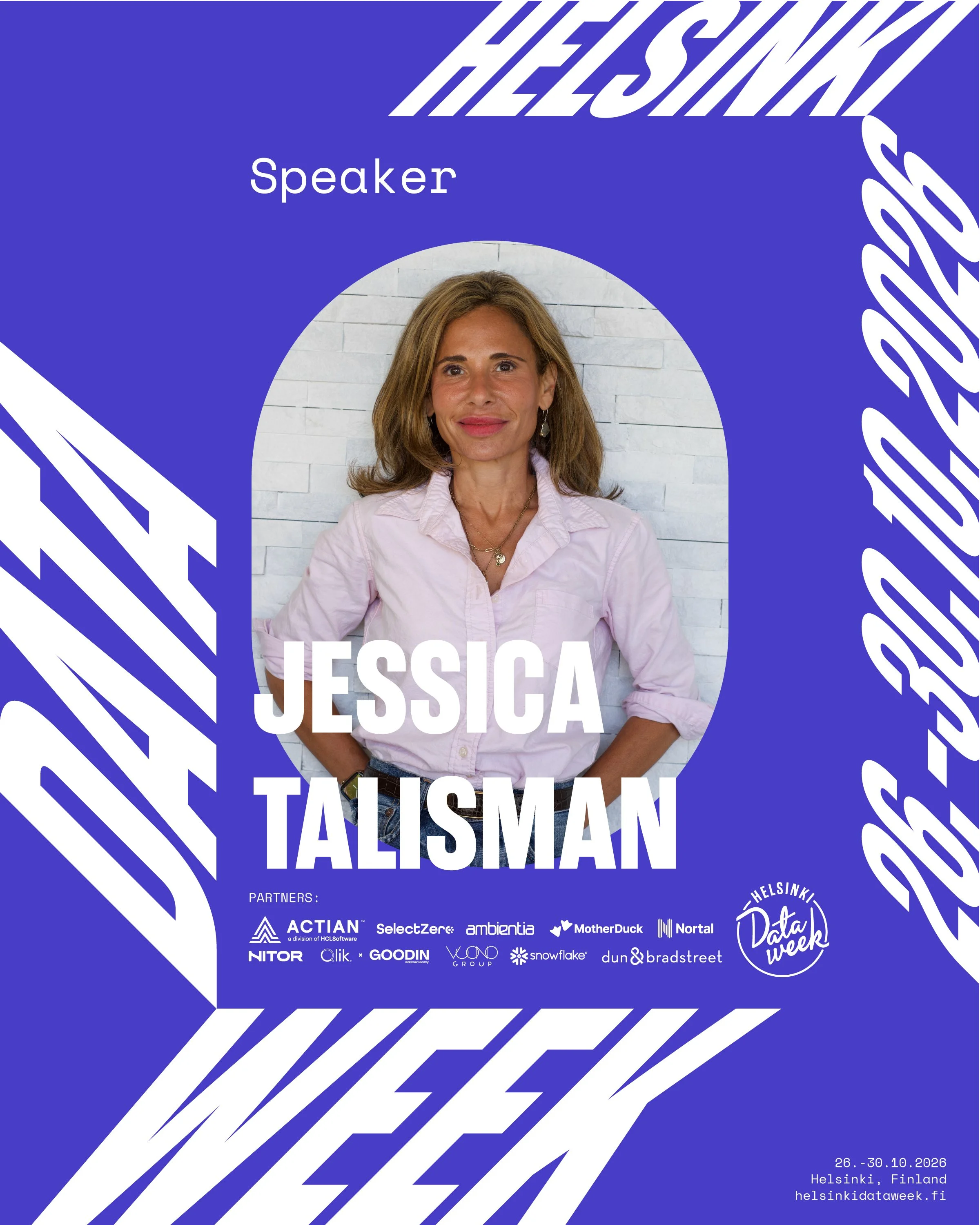
Jessica Talisman
Founder, Ontology Pipeline
Jessica Talisman is an information architect, semantic strategist, and lifelong student of systems, meaning, and human understanding. For over 25 years, she’s worked at the intersection of knowledge frameworks and digital infrastructures—helping both large organizations and cultural institutions build information systems that support clarity, interoperability, and long-term value.
Jessica has designed semantic information and knowledge architectures across a wide range of industries and institutions, from enterprise tech to public service to the arts. She has held roles at Overstock.com, Pluralsight, GDIT, Amazon, System1, Battelle, the Oregon Health Authority, the US Department of Justice, and most recently, Adobe.
Throughout the years, Jessica has worked with GLAM organizations (Galleries, Libraries, Archives, and Museums), including the Smithsonian Institution, The Shoah Foundation for Visual History, Twinka Thiebaud and the Art of the Pose, Nritya Mandala Mahavihara, the Shogren Museum, Shock the System, and the Oregon College of Art and Craft.
Jessica has her undergraduate degree in History, a Master's in Teaching (MAT), and a Master’s in Information and Library Science (MLS). She lives in Santa Cruz, California.
***
Jessica’s talk: Context Graphs, Context Layers, and the Semantic Renaissance
Two engineering traditions are converging on knowledge graphs from opposite ends. Software engineering built the LLM wiki: llms.txt (2024), Karpathy's cross-linked markdown wiki (2026), and Google's Open Knowledge Format (OKF) — curated files written for agents to read.
The data discipline built the semantic layer, which includes governed metrics and entity definitions, now open-sourced through MetricFlow and standardized through the Open Semantic Interchange. In 2025–2026, both communities are reaching for context. VCs positioned the "context graph" around the needs of agentic architectures, publishing the late 2025 context graph article that set LinkedIn on fire; shortly thereafter, semantic layer vendors reframed their work as the "context layer" to benefit agentic architectures. Two disciplines, working independently, are wrestling with how to add meaning that machines can read.
This talk maps the convergence. The LLM wiki supplies readable, versioned context without formal semantics or stable identity. The semantic layer supplies governed definitions without open-world reasoning or linkability. Together, they form a knowledge graph, and RDF — now advancing through 1.2 — is the common ground that lets the two implementations interoperate rather than coexist.
Supported by peer-reviewed research, knowledge graph grounding improves factual reliability, with graph-based retrieval delivering its largest gains on multi-hop reasoning. The convergence opens a renaissance for RDF adoption, driven by two communities reaching for ontology-based implementations from opposite ends. The Semantic Renaissance brings networks of meaning that are elegant, interoperable, and machine-verifiable.
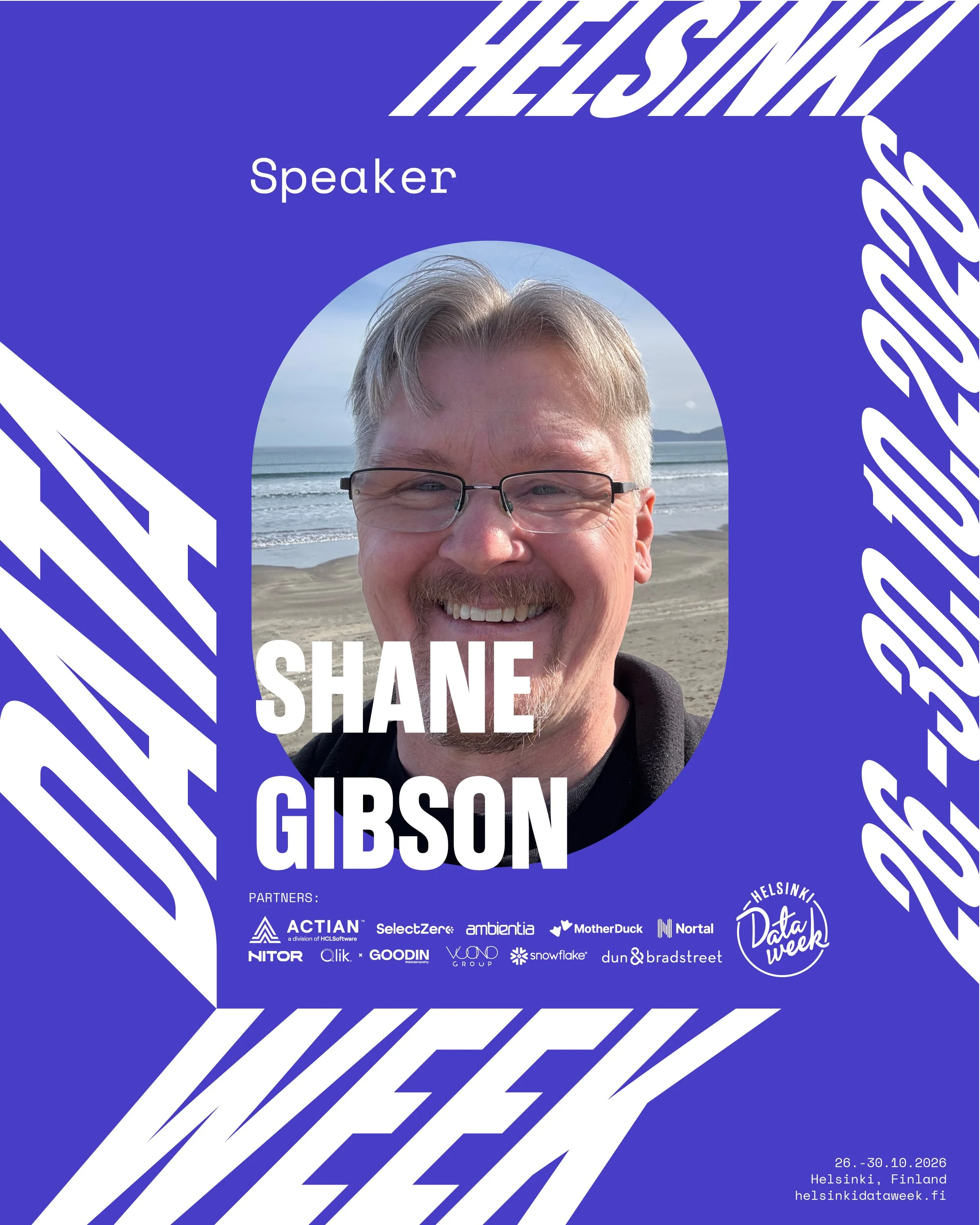
shane Gibson
Co-Founder, AgileData.io
Shane Gibson created the Information Product Canvas and wrote the Agile Data Guide series, beginning with An Agile Data Guide to Information Product Canvas.
With over 35 years of experience in data strategy, architecture, and consulting, and more than a decade of coaching data teams, Shane is a recognised Agile Data Coach who helps data teams and organisations change how they work.
Known for his practical, no-nonsense approach, Shane simplifies complex data challenges and bridges the gap between technical data teams and stakeholders. He empowers data professionals with actionable patterns and templates, helping them deliver value faster, reduce waste, and have more fun.
Shane’s extensive background includes roles as an Agile Data Coach, Consultant, Enterprise Architect, Data Architect, Product Manager, and founder of multiple data companies. He also hosts the AgileData Podcast and has authored courses focused on practical data practices, including the popular “Gather data requirements in 30 minutes using a shared language”. His work, inspired by the Agile Data Way of Working, provides a proven toolkit for navigating the complexities of modern data delivery.
Shane is passionate about helping others succeed in data and analytics and sharing patterns that help teams become “data and business translators,” build trust with stakeholders, and ensure data work actually gets used.
***
Shane & Juha’s talk: Concept Models, Ontologies, Metric Layers, Graphs - oh my!
Ontologies, semantic layers, metric layers, knowledge graphs, graph databases, context for GenAI. They all promise to capture what an organisation means. Underneath each of them sits something that looks a lot like a Concept Model: the things the organization cares about, how they relate, and what they mean, written in its own language and agreed on by the people who hold the knowledge.
In this fireside discussion, Shane and Juha contrast and connect the Concept Model with each of those approaches, where they overlap, where they don’t, and why it matters more now that GenAI tooling needs context it can trust. Questions welcome; there is time for them at each turn.
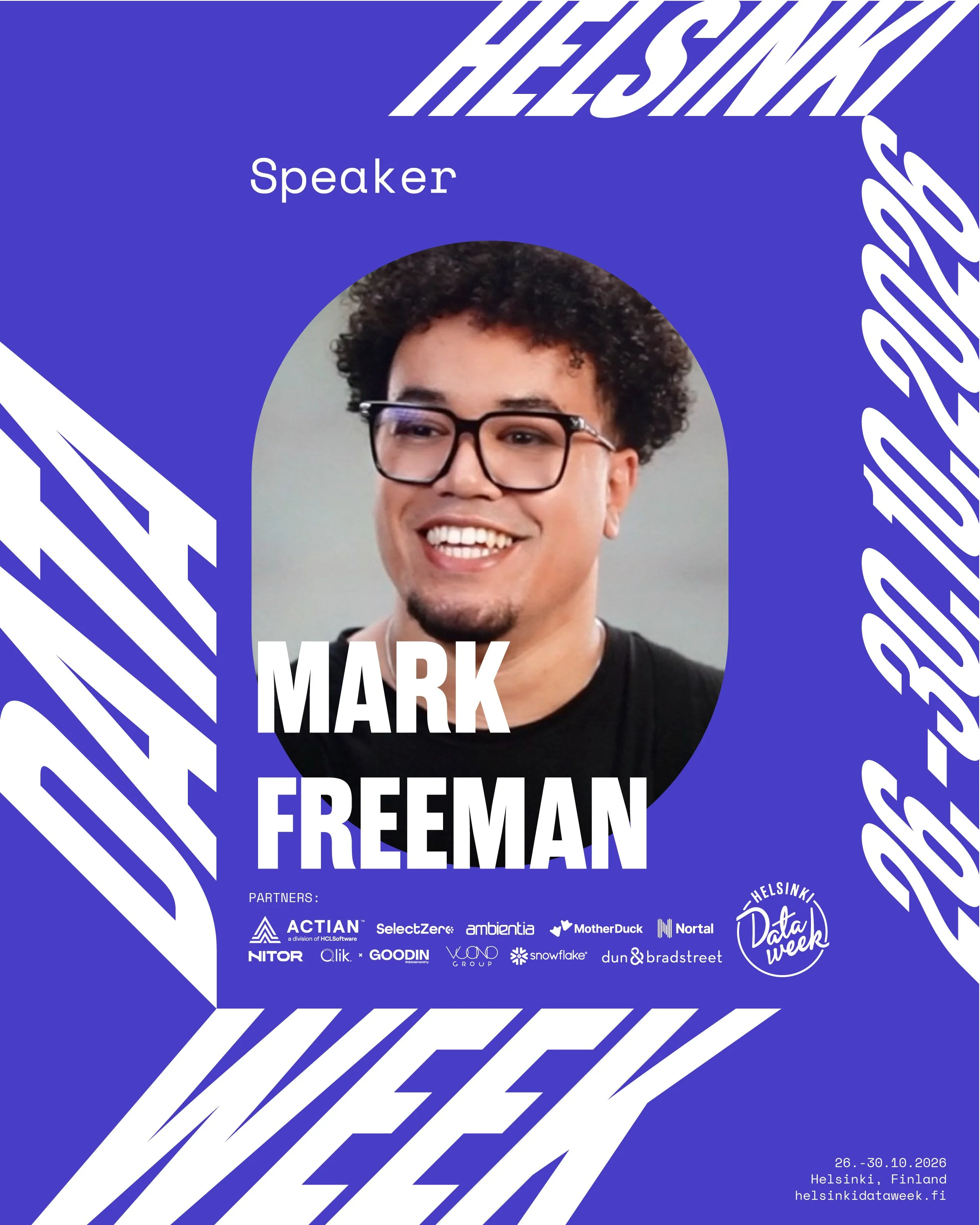
Mark Freeman
Founder & Principal, On the Mark Data
Mark Freeman is a data scientist turned data engineer with a deep obsession with data quality. He co-authored the O’Reilly book Data Contracts: Developing Production-Grade Pipelines at Scale, where he shares insights and best practices for ensuring reliable, high-quality data flows within organizations.
Mark has worked at numerous startups, putting machine learning models into production, integrating data analytics into products, and leading migrations to improve data infrastructure. His current focus is on applying the principles of data contracts to autonomous coding agents to ensure generative AI is trustworthy, reliable, and auditable.
***
Mark’s talk: Data Contracts in an Agentic Era: When Knowledge Becomes Machine-Readable
LLMs not only make it easier to extract information from unstructured text, but also enable AI agents to act on it. But neither eliminates a familiar challenge: that the people, processes, and business definitions behind the data keep changing. Without deliberate change management, today’s semantic layers risk becoming tomorrow’s semantic swamps– much like how our industry used data lakes.
This talk argues that our understanding of data contracts must expand to protect knowledge infrastructure. Drawing on lessons from his O’Reilly book, Data Contracts: Developing Production-Grade Pipelines at Scale, Mark Freeman explores how these systems provide an architecture that protects semantic meaning and maintains it as the business evolves, especially when more and more workflows are being handed to AI.
Mark introduces a proposal for semantic contracts: applying data contract practices to the metadata that codifies organizational knowledge. By connecting metadata standards with automated validation and change alerts in CI/CD, teams can surface changes before they silently disrupt downstream data platforms and AI agents.
Attendees will leave with a framework for connecting knowledge infrastructure with data engineering’s change-management practices, and a clearer understanding of where data contracts fit within an ever-changing agentic architecture.
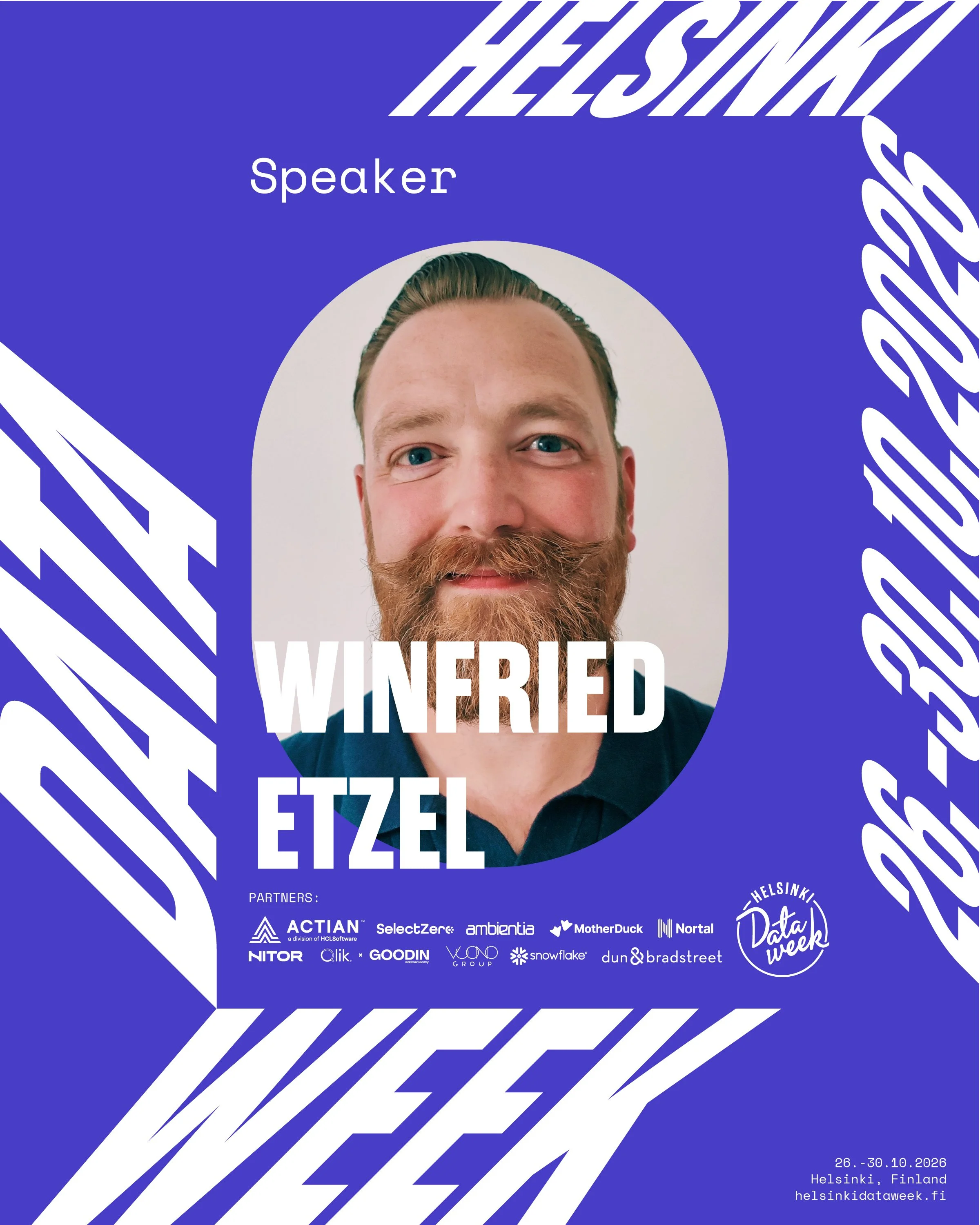
Winfried Etzel
Founder, Winfried Etzel AS
Winfried Adalbert Etzel is a key figure in the Nordic data community, known for his strong contributions to professional forums and his commitment to promoting data governance, data strategy, and organizational design for data teams.
Winfried has dedicated his career to emphasizing the importance of information and data management and to a strategic, holistic approach to treating information and data as a valuable organizational asset.
Through his work with the #MetaDAMA podcast and his voluntary engagement in the Nordic data community, he has driven innovation, helped build a strong data community, and promoted professional development across the Nordic region.
Winfried is currently working on his book, under the working title Data Governance in the Wild, in which he explores how Data Governance needs to change to adapt to distributed landscapes and AI.
***
Winfried’s talk: From Handover to Hangover - How Organizations Delegate Decisions to Machines and Lose Accountability on the Way
Organizations are automating faster than they can govern. As AI agents take over decisions once owned by people, accountability gets blurred. This presentation examines the structural forces behind this drift: why automation complacency is a law, why an agent's stated rationale records what it did, not why it acted, and why accountability that belongs technically to everyone belongs practically to no one.
The crossing happens gradually. Human decides, machine assists. Machine decides, human reviews. Machine decides, no one notices. The line moves while attention fades.
The argument is blunt: the machine can reason, make decisions, and even act on them, but it cannot be accountable for any of it. From there, the presentation gets practical, anchored in the Data Governance Triad (Negotiation, Direction, Audit) and some practical artifacts you can apply.
What's in it for you?
A clear way to decide what to automate, what to supervise, and what to keep firmly in human hands, without giving up the speed and scale you adopted AI for.
Three key takeaways
Automation does not transfer accountability. A human must own the intent.
The line between delegation and abdication moves gradually. Attention fades over time.
Governance is a design problem, not a policy problem. The answer is not more rules.
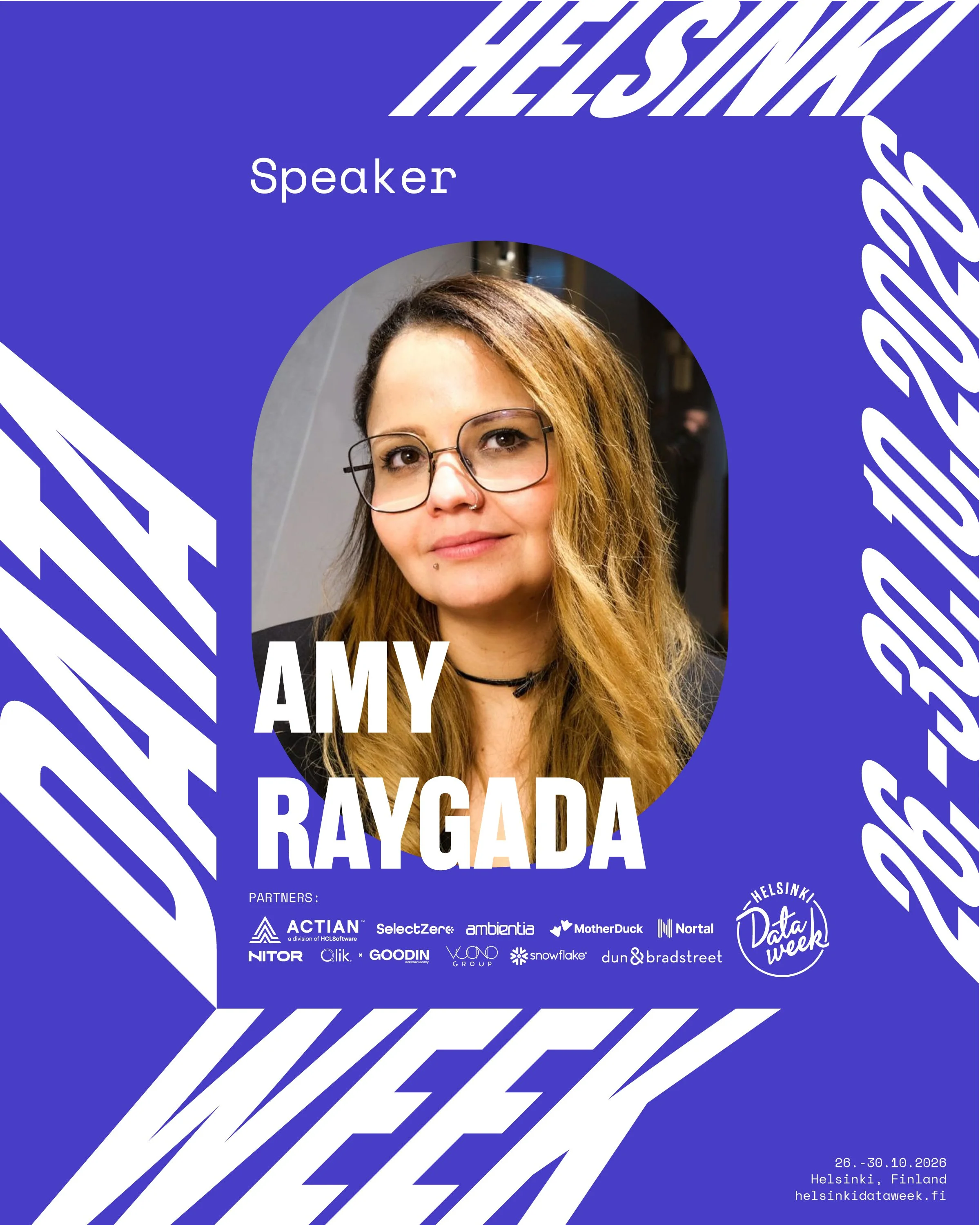
Amy Raygada
Principal Data & AI Strategist - Data Governance Lead, Thoughtworks
With over 20 years of experience, she specializes in data strategy, governance, and data product design, working at the intersection of business and technology. She helps companies move away from one-off data projects and toward scalable, product-driven approaches that deliver real value.
Amy has worked with organizations across industries to modernize their data ecosystems, improve data quality, and make AI initiatives work in practice, not just in theory. She’s known for her practical, no-nonsense approach and her ability to translate complex data challenges into clear, actionable strategies.
She’s also an international speaker and an active voice in the data community, passionate about cutting through the noise around AI and focusing on what really matters: strong data foundations, clear ownership, and execution that delivers.
Amy’s book, Data Products Volume 1: From Projects to Products: Ownership, Governance, and Business Value, was published earlier in 2026.
***
Amy’s talk: The Readiness Illusion: Why Even the Best AI Can’t Fix Bad Data
Ask a leadership team if they’re ready for AI and most hands go up. Ask the same room to define “customer,” and you’ll get three different answers. That contradiction is the readiness illusion, and it’s quietly sinking AI initiatives across every industry.
Only 7% of enterprises say their data is truly ready for AI, yet nearly half believe agentic AI will somehow fix their data problems. Meanwhile, autonomous agents are being deployed onto foundations that can’t support them — and unlike a human analyst, an agent never second-guesses bad data. It just executes, fluently and confidently, at machine speed.
This talk cuts through the hype to the unglamorous truth: AI success depends not on data volume but on encoded meaning. Amy Raygada shares four questions every leader should ask before funding an AI initiative, and a practical path from “readiness illusion” to data that can explain itself.
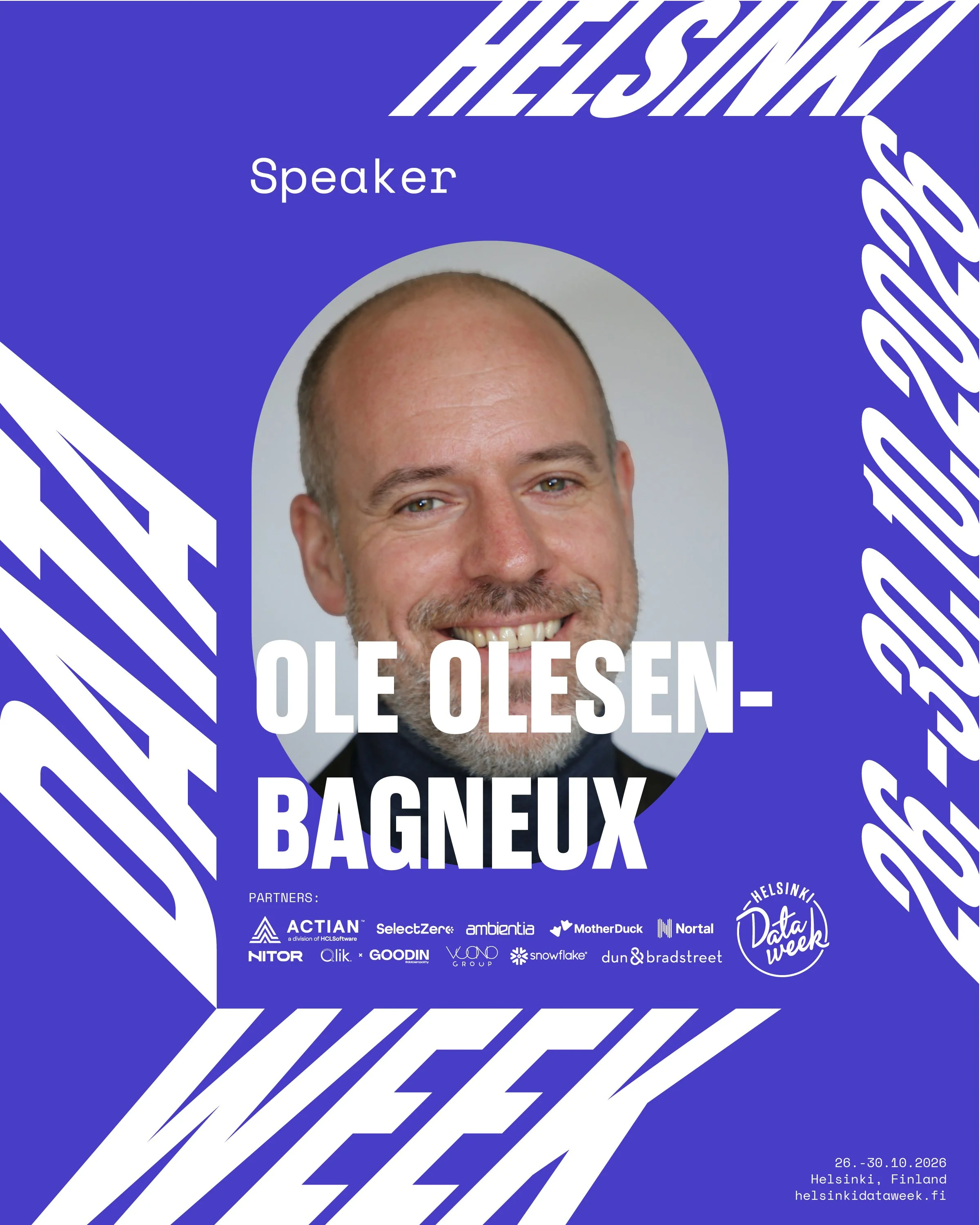
OLE OLESEN-BAGNEUX
VP, Chief Evangelist, Actian
Ole Olesen-Bagneux is a globally recognized thought leader in metadata management and enterprise data architecture. As VP, Chief Evangelist at Actian, he drives industry awareness and adoption of modern approaches to data intelligence, drawing on his extensive expertise in data management, metadata, data catalogs, and decentralized architectures.
An accomplished author, Ole has written The Enterprise Data Catalog (O’Reilly, 2023). He recently published Fundamentals of Metadata Management (O’Reilly, 2025), introducing a novel metadata architecture known as the Meta Grid. With a PhD in Library and Information Science from the University of Copenhagen, he bridges traditional information science and modern data management. Before joining Actian, Ole served as Chief Evangelist at Zeenea, where he helped shape and communicate the company’s technology vision. His industry experience includes leadership roles in enterprise architecture and data strategy at major pharmaceutical companies, such as Novo Nordisk.
Ole is passionate about scalable metadata architectures, knowledge graphs, and enabling organizations to make data truly discoverable and usable.
***
Ole’s talk: The Meta Grid, Revisited
In his opening keynote at the first edition of Helsinki Data Week in 2024, Ole Olesen-Bagneux asked the audience whether he should publish his book Fundamentals of Metadata Management.
He was unsure because too many in tech look for smooth answers, not real solutions. The audience said "publish!" and so he did. Now, two years later, Ole returns to Helsinki Data Week. The question is: How did the book do? This talk revisits the Meta Grid's core ideas.
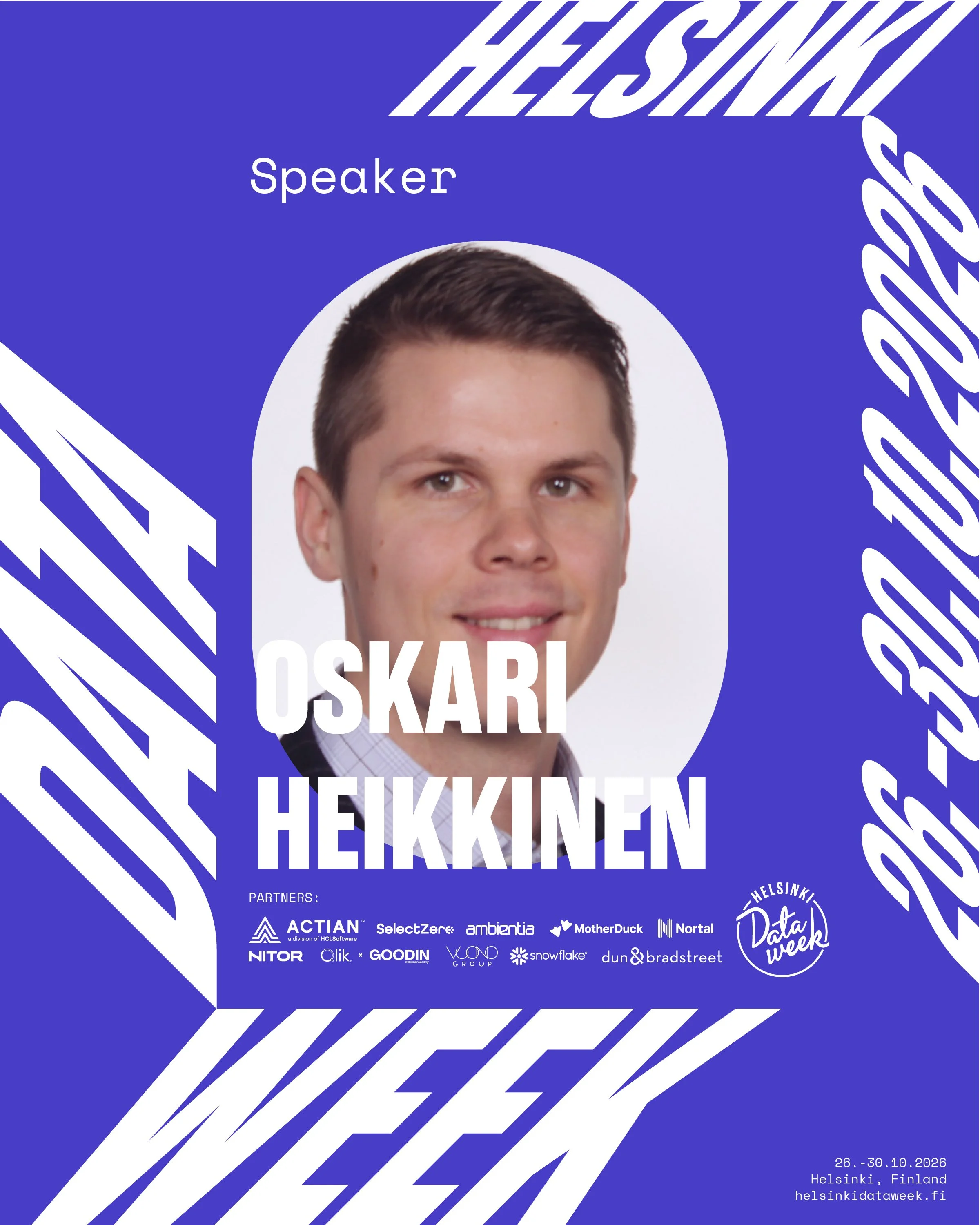
Oskari Heikkinen
Data Analytics Architect, Datablinc
Oskari Heikkinen is a Data Analytics Architect, founder of Datablinc, and Microsoft Data Platform MVP with over a decade of experience building data solutions at scale on Microsoft's cloud data stack. He has designed and delivered data platforms and analytics architectures for some of the largest organizations in the Nordics, helping them turn complex data landscapes into practical, high-impact solutions.
Building upon this foundation, Oskari is known for his hands-on, pragmatic approach, combining deep technical expertise with a strong focus on real-world outcomes. His work spans modern data platforms, Microsoft Fabric, and end-to-end analytics solutions, with a particular passion for helping teams build robust, scalable foundations that actually deliver business value.
Beyond consulting, Oskari is a Microsoft Certified Trainer and active community speaker who regularly shares his knowledge through events, workshops, and training sessions. He holds the relevant certifications, including Azure Solutions Architect, Fabric Analytics Engineer, and Fabric Data Engineer, and is widely recognized for his ability to make complex data concepts clear, approachable, and actionable.
***
Oskari & Vesa’s talk: From Cubes to Copilots: The Evolution of Data and Analytics Platforms
TBA
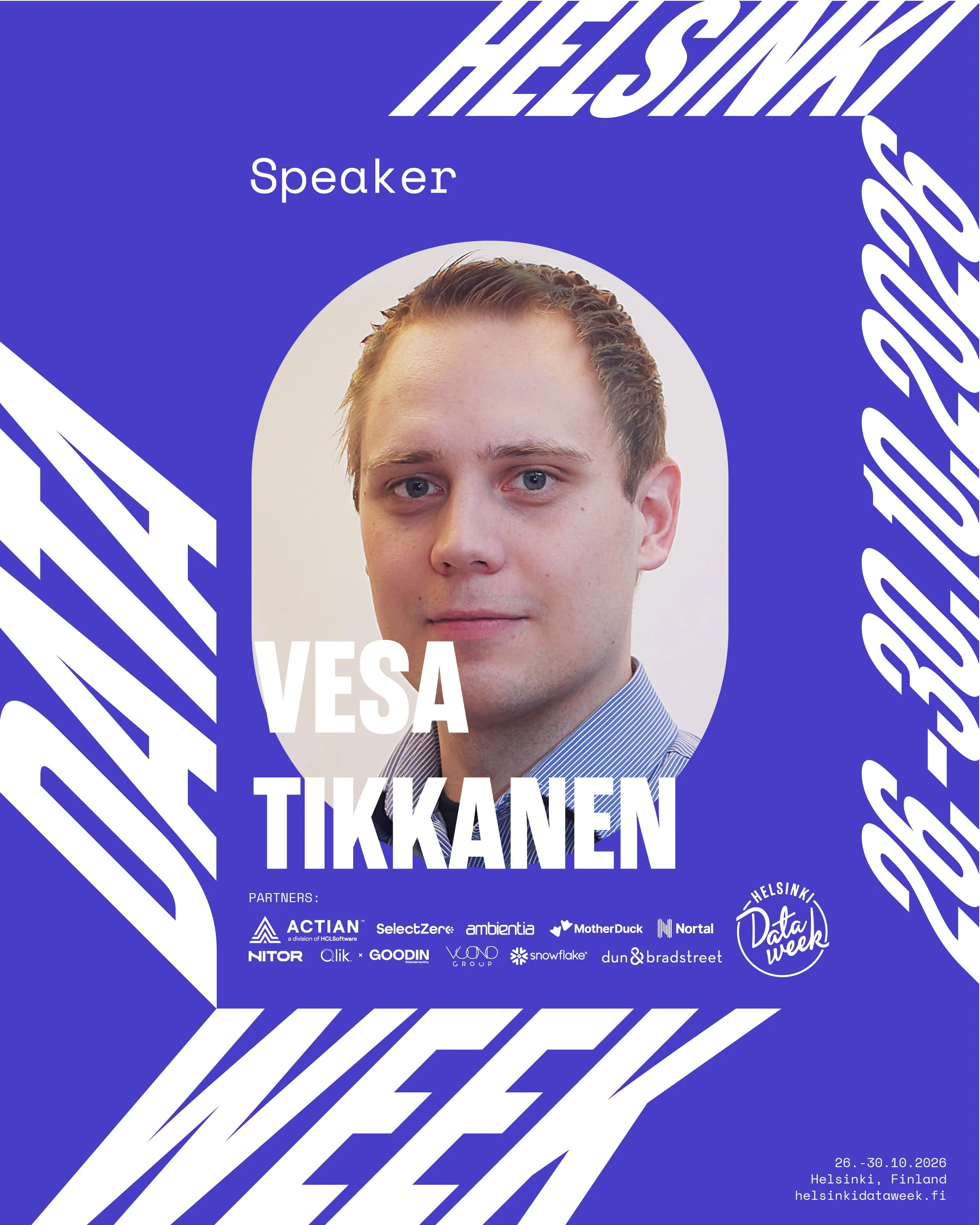
Vesa Tikkanen
Data Platform Architect, Qumio
Vesa Tikkanen is a Microsoft Certified Master and Microsoft Data Platform MVP who helps organizations get measurable value from their Microsoft data investments. He has been developing on the Microsoft stack since the SQL Server 2000 days, giving him a career long enough to remember when today’s “modern data platform” patterns were still being assembled one server, cube, and stored procedure at a time.
Vesa has worked with Qumio since 2012. Before that, he founded and ran a company focused on marketing automation and measurement, combining business outcomes with data-driven systems long before “data-driven” became a mandatory slide title. Across roles, his focus has remained the same: build practical Microsoft-based solutions that make data platforms easier to build, operate, and trust.
An agile-oriented architect at heart, Vesa works exclusively within the Microsoft ecosystem and has a long-standing passion for BI development, focusing on tabular models, performance, and sharing what he learns with the community. Lately, his AI work has focused on the backend: vector search optimization, embedding acceleration, LLM performance tuning, and tool development.
And yes, Vesa knows what Copilot is—he just refuses to guarantee which letters should be uppercase, whether there is a space in the product name, or what the “how to write Copilot this week” guidance says by the time this bio is published.
***
Oskari & Vesa’s talk: From Cubes to Copilots: The Evolution of Data and Analytics Platforms
TBA
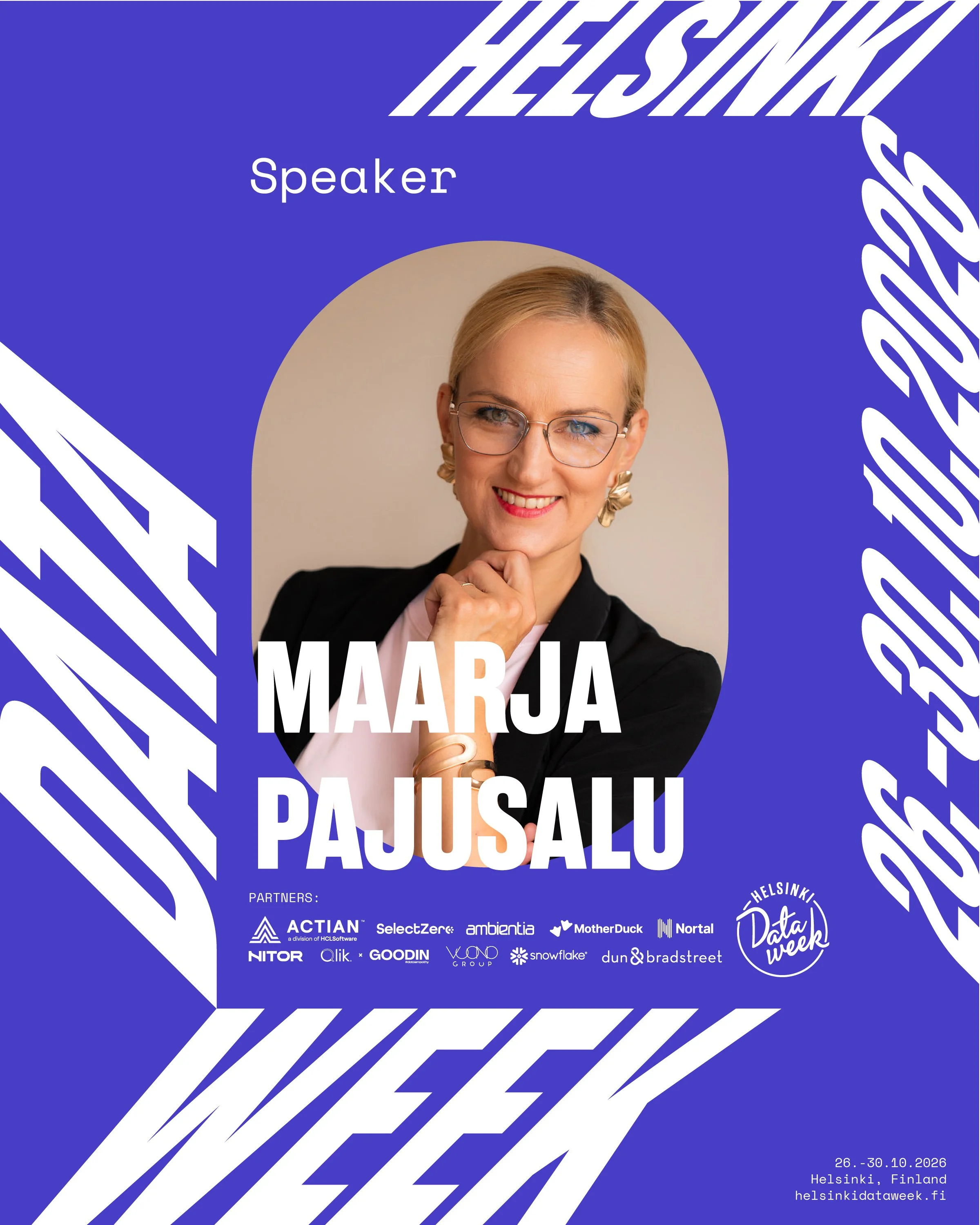
Maarja Pajusalu
Doctoral Researcher, Health Informatics, University of Tartu
Maarja Pajusalu is a doctoral researcher in health informatics at the University of Tartu Institute of Computer Science, where she develops visual methods for exploring health data. She came to research from software development, where she worked as a team lead and product owner. Her work sits at the intersection of data, design, and visual communication.
She has trained analysts and researchers across the Estonian public sector and co-created the University of Tartu course on data visualization and presentation.
She is also a speaker and an active voice in the data community, and gave the opening keynote at Tallinn Data Week 2025.
***
Maarja’s talk: From Default Charts to Decisions and Impact - Dataviz in Action
In her talk, Maarja puts the human reader first. We can use AI to make charts, but we make them for humans.
Starting from four questions the reader asks:
What does it show?
What does it mean?
Is it for me?
What should I do now?
Maarja shows how the same data needs a different view for the expert, the newcomer, and the decision-maker, and which accessibility rules every chart should meet.